
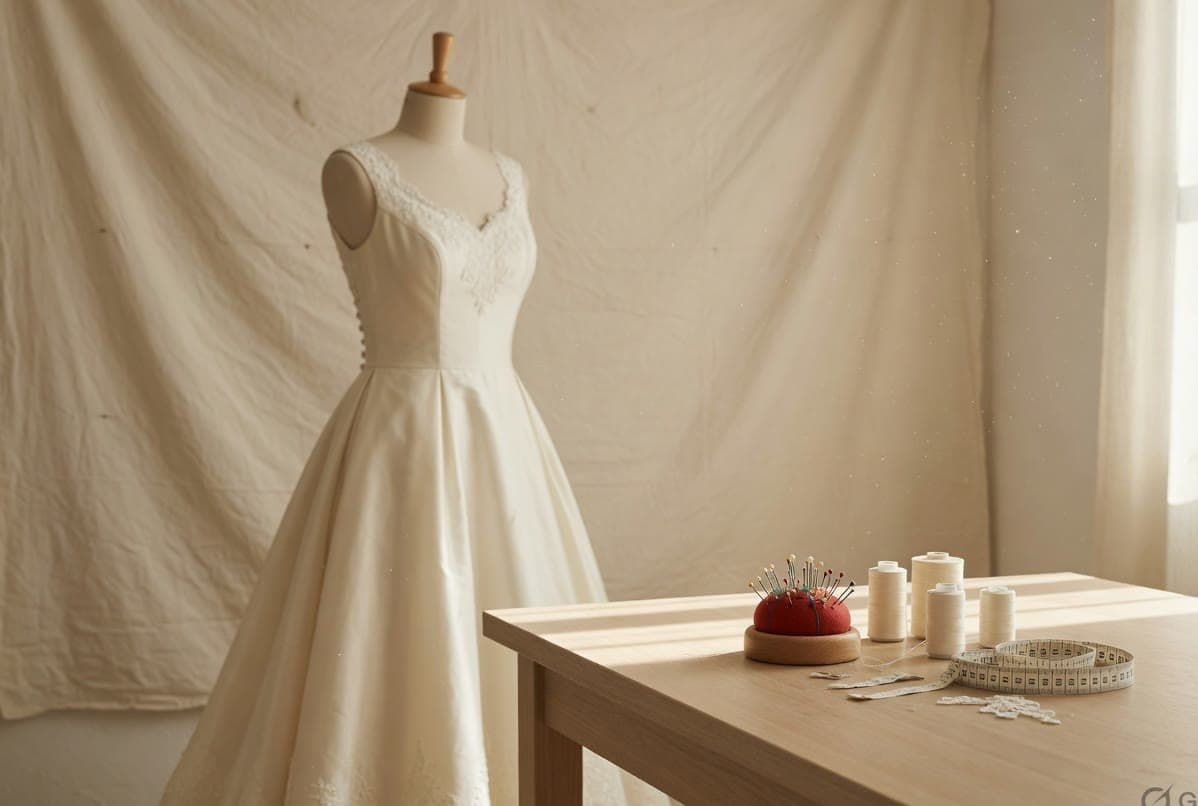
The first time you step into the dress after it arrives, it will not fit. That is not a problem. That is the plan.
Every fitting changes the dress a little. First it is mapped in pins. Then you see a preview of the finished shape. Then, at the last appointment, it is simply yours. A wedding dress alterations timeline is less about the calendar than about giving yourself enough time to stop thinking about the dress.
Here is the short answer. Start alterations about two to three months before the wedding, according to The Knot. Plan on about three fittings, though two to four is normal. Finish about two weeks out. The work itself usually takes 6 to 8 weeks. The Knot also notes that fittings too early risk body changes after the work is done, and fittings too late risk rush fees.
Still choosing? Start with our guide to finding the one.
Book the Seamstress Before You Think You Need To
Good seamstresses fill up. The Knot's shopping timeline says the dress often arrives about three to four months before the wedding, and that is when to call, because seamstresses "can book up fast." Brides suggests researching specialists about five months out, while the dress is still being made.
I like the name in your phone the week you say yes. Ask your salon whether alterations are in-house. If they aren't, pick someone who regularly works on bridal gowns. One shop I know of books the first two appointments at once, with a cushion in case you need another. That habit is worth copying.
Bridesmaid dresses run on a shorter version of the same clock. Send them with their shoes too.
Fitting One: Pins, Questions, and the Quote
When. Aim for about 8 to 12 weeks out, which is roughly two to three months. The Knot's fitting guide puts the first appointment at about eight weeks. Its alterations page and dress styles FAQ both say two to three months, and its sizes guide says no later than three months. Brides' timeline says at least six to eight weeks. One large bridal retailer uses 8 to 12 weeks. If you are adding sleeves or reworking the bodice, The Knot's styles FAQ suggests a couple of extra weeks. With heavy beading or big changes, I aim for the three-month end.
What it does to the dress. Nothing permanent yet. Brittany Bergeron of The Bridal Finery, quoted by The Knot, says the seamstress starts with the bodice, then pins the hem. The dress becomes a map of where it will change.
Bring the whole vision here, sleeves and neckline included. Ask for a quote before you agree, as The Knot recommends. At Alts, a New York shop quoted by The Knot, the quote arrives at this first fitting. Put that number on its own line in your budget checklist.
Speak up about puckering, bunching, or pulling. Bergeron tells brides to ask why it is happening and how it will be fixed. Book the next fitting with the same seamstress before you leave.
Three questions worth asking: "What will you change, and what can't change on this dress?" "Will I see it basted before anything is cut?" "When is payment due?"
Fitting Two: The Preview, and the Bustle
When. Roughly four to six weeks out. The Knot's fitting guide places it about six weeks to a month before. Brides' timeline puts it at four weeks.
What it does to the dress. This is where shops diverge, so ask yours which way it works. At Alts, the second fitting is a basted preview: the changes are sewn loosely so they can still move, and no fabric has been cut yet. At one large bridal retailer, the major alterations are already done by fitting two, with the bustle pinned. Neither method is wrong. What matters is knowing how much can still change.
Move in it. The Knot's shopping timeline reminds brides they will wear it for 10 or 12 hours, so sit, stand, dance, and breathe. If you want it snug, Bergeron suggests asking for a chair before that portion is finalized.
The bustle is usually pinned or created here. Ask to see a couple of options pinned, as Bergeron recommends. For styles and how to choose, see our guide to wedding dress bustle types. Ask how to get wrinkles out, whether to iron or steam, and what to do about a spill.
The Final Fitting and Pickup
When. About one to four weeks out, with two weeks the most common answer. The Knot's fitting guide says about one month or two weeks; its shopping timeline says two to three; its styles FAQ says no later than two weeks. Brides puts the third round typically two weeks before. Alts schedules its third at two to four weeks. One large bridal retailer uses one to two.
What it does to the dress. It becomes finished. Bergeron says that at the last appointment the dress should fit just how you envisioned it. This is sign-off.
Bring the person who will bustle you on the day. The Knot, Brides, and several shops all say the same thing. Let them practice, and film the seamstress doing it. Our bustle types piece covers the helper advice in full. Put the bustle moment on your wedding day timeline so someone is ready when the music changes.
A note you can hand that person: "Hooks go in order, bottom to top. If one won't catch, skip it and we'll fix it at the table."
Pickup often lands about a week before, with the remaining balance due, according to Brides. Check for snags before you leave (The Knot). Never check the dress on a plane (Brides). A fourth touch-up is fine and not a bad sign; one large bridal retailer schedules one for intricate work, and some independent shops plan on two to four fittings.
What to Bring (and Wear) Every Time
Bring the actual shoes, at the heel height you will really wear. The Knot, Brides, and Alts all treat this as non-negotiable, because heel height sets the hem. Similar shoes are not good enough.
Bring the undergarments and shapewear you plan to wear. Sources disagree on when to buy them: The Knot says lock them in before the first fitting, Brides suggests holding off until after. My practical middle: bring what you plan to wear, and if you are undecided, bring the options. Alts notes that the seamstress can help you choose.
Bring the veil and accessories, especially for later fittings; see our guide to veil lengths if you are still deciding. If your hair and makeup trial is done, wear your hair close to the plan for the final fitting (our hair and makeup timeline covers the trial). Bring one calm person, not a crowd. The Knot recommends bringing someone; I prefer one. Wear something easy to step out of.
If Your Body Changes Between Fittings
Bodies change under wedding stress, in both directions. That is exactly why The Knot warns against fitting too early.
Tell your seamstress about any change, up or down. Do not hide it, and do not plan your fittings around a number on a scale. The Knot's sizes guide notes that a dress can typically be taken in about two sizes and let out about one, and that a lace-up corset back or a gusset can help beyond that. The final fitting exists to catch what has shifted.
Rush Alterations
Yes, they happen. The Knot notes that leaving alterations too late risks rush fees. Each shop draws its own line. At Alts, rush fees start on bridal work brought in within six weeks of the wedding. One independent shop I have seen needs at least two to three weeks for a rush job. The Wedding Dresser, in Baltimore and Brooklyn, describes compressing fittings into a few days when needed; bridal alterations there typically run 6 to 12 weeks when there is time.
If you are short on time, call several seamstresses, say the date first, bring the dress, shoes, and undergarments to the first visit, and keep the changes simple. Rush is reasonable for a short engagement, a late purchase, or a fitting that went wrong elsewhere. It is not a plan for a full redesign.
Where the Hem Should Fall
Always with your shoes on. The Knot and Brides both treat this as the starting point, because heel height decides the mark.
There is no single rule for the number. Bridal designer Avery Austin describes the front of a floor-length gown as about an inch off the floor, so you will not step on your own hem, with the back free to touch. Sarah Stoute, a bespoke bridal seamstress, hems the front so it is just kissing the ground and eases into the train; she notes that grass takes more off than concrete. Both are practitioner views. Ask your seamstress what suits your shoes, your dress, and your aisle.
The hem comes last for a reason. Bergeron starts with the bodice before the hem, and Stoute does not touch the hem until the bodice, waist, and hips are settled, because those changes move it. Lace and layered skirts are hemmed layer by layer. For fabric behavior at the hem, see our guide to wedding dress fabric types.
FAQ
How long do wedding dress alterations take?
The Knot says the work usually takes 6 to 8 weeks. Start about two to three months out so there is room for fittings and another pass if needed.
When should I get my wedding dress altered?
Book the seamstress while the dress is being made, or by the time it arrives. Plan the first fitting for about 8 to 12 weeks before the wedding.
How many fittings do you need?
Usually three. Two can be enough for a simple hem. A fourth is fine for intricate work.
How long does a wedding dress fitting take?
At Alts, the first fitting generally lasts about an hour, with later ones shorter. The Wedding Dresser puts consultations at about an hour and later fittings at 30 to 60 minutes. Plan on about an hour for the first, less after.
Do you pay for wedding dress alterations before or after?
It depends on the shop. Brides says the remaining balance, including alteration fees, is often paid at pickup. Alts collects across the three fittings. Ask at fitting one when yours is due.
Do you tip the seamstress?
The Knot's tipping guide says tipping alterations pros is optional, but appreciated for excellent work, and to give it at the final fitting. Real Simple notes that tipping a tailor is not mandatory, though more common for bridal work. For broader manners, see our modern guide to wedding etiquette.
What if I'm losing weight before my fittings?
Tell your seamstress. Bodies change in both directions, and the final fitting is there to absorb it. Do not plan around a future number.
Is there wedding dress fitting etiquette?
Be on time. Bring the shoes you will wear. Bring one calm person. Speak up early and kindly about anything that feels wrong. The dress cannot answer for itself.
A short timeline checklist
- When you say yes: shortlist seamstresses.
- By the time the dress arrives (about three to four months out): first appointment booked.
- About 8 to 12 weeks out: fitting one, pins and the quote.
- About 4 to 6 weeks out: fitting two, the preview and the bustle.
- About 2 weeks out: the final fitting, with your bustle person.
- About a week out: pickup, balance, and a last look for snags.
The dress changes a little at each fitting, and so do you. By the last one, the questions should be finished. Pins become seams, a preview becomes a finished gown, and the map becomes a dress that moves with you.
That is the quiet point of starting early. On the morning of the wedding, the dress should be the easiest thing in the room. You put it on, someone you trust does the bustle, and you walk out thinking about everything else.