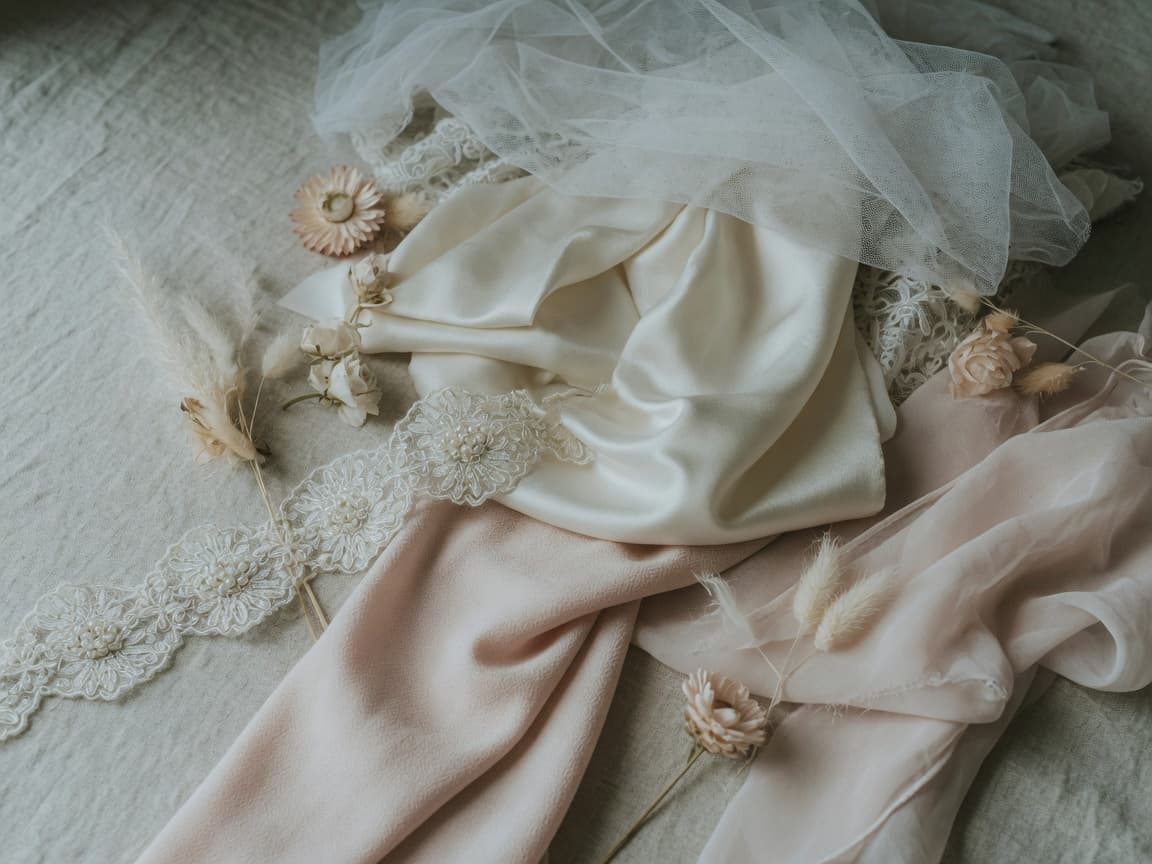
The silhouette is what you notice first in the mirror. Fabric is what decides how that silhouette holds, softens, or shifts by dinner. If you are early in bridal appointments, or between them, this is a wedding dress fabric guide for that quiet middle: wedding dress fabric types explained by how they behave through a real day, not a glossary of every bridal textile name.
You will hear plenty of wedding dress fabric names in the salon. You do not need all of them. The types of wedding dress fabric that matter most fall into a few behavior families: structure, fluid, air and volume, and lace as a family. For each one I ask the same day questions: how it holds or releases a shape, how it reads in photos and light, what happens after the car and ceremony sitting, how it feels in heat or cold, how it moves on the aisle and dance floor, and what to ask about fittings.
Season and formality still steer fabric choice, which Brides covers well in their materials guide. Comfort and venue still matter too, which is why our bride's guide to finding the perfect wedding dress stays useful early on. This piece stays narrower: what each fabric quietly does through the day.
Structure Fabrics: Duchess Satin, Mikado, and Taffeta
Structure fabrics are the architectural ones. They hold seams, bows, clean A-lines, and ball skirts with intention. In photos they often carry more sheen or a crisp light catch. They are generally sturdier after sitting than fluid fabrics, though sitting can still leave soft memory folds, so keep a steam plan. They tend to feel warmer outdoors in summer and friendlier in cool rooms or fall and winter. Skirts keep volume on the aisle; trains need a dance-floor plan, which is where wedding dress bustle types become useful. At fittings, structure takes clean seams well but offers less drape forgiveness than crepe.
Duchess satin
Duchess satin is smooth, luminous, and firm enough to sculpt. In photos it gives classic bridal sheen; watch hard midday sun on large smooth panels for hot spots. It holds shape through standing portraits. Sitting may leave softer crease lines than fluid satin, but keep a steam plan. It feels substantial against the skin. Cooler venues suit it better than humid outdoor noon.
Mikado
Mikado wedding dress meaning, in plain talk: a denser structured fabric, often slightly more matte or textured than glossy satin, built for architectural lines. Zelouf Fabrics lays out the mikado-versus-satin contrast clearly. In photos the restrained sheen reads polished without mirror glare. Through a formal indoor day it keeps its shape well; the weight can feel warmer in heat. Movement stays intentional; dancing feels more held than floaty.
What is the difference between satin and mikado? Duchess satin is smoother and more luminous; mikado is denser, often subtler in sheen, and more sculptural. Silk versus satin is different again: satin is a weave or finish, silk is a fiber. More on that under fluid fabrics.
Taffeta
Taffeta has a crisp hand, a slight rustle, and strong shape memory. Photos show bright, defined edges rather than liquid glow. It holds volume well, though a crushed car seat can leave sharp crease memory. On the aisle you get a structured swish; that rustle is part of the personality, not a flaw.
Fluid Fabrics: Crepe, Silk Charmeuse, and Fluid Satin
Fluid fabrics release a silhouette into soft lines: columns, slips, mermaids with give. Crepe's matte eggshell texture often forgives mixed light, which is why people ask what wedding dress fabrics photograph best and land here. Charmeuse and fluid satin catch light and show every fold. Fluid satins and charmeuse show sitting creases more readily; crepe often recovers better (relative, not magic; blends and lining still matter). Lighter fluid fabrics often feel cooler, depending on what sits underneath. Aisle sway and dance-floor ease are their gift. Bias cuts need walking tests at fittings. Stretch crepe eases movement; bias charmeuse is less forgiving if the grain shifts.
Crepe
Crepe wedding dress pros and cons, in plain talk. Pros: matte, modern, comfortable drape, often kinder after sitting, and clean in photos under mixed light. Cons: less bridal glow if you want sheen, it shows fit precision, and some crepes cling more than structured fabrics. If you want wedding dress fabric that does not wrinkle as much as the shiny options, crepe is a strong relative candidate. Still sit-test and ask about lining.
Silk charmeuse
Silk charmeuse has a liquid face and a soft reverse. It loves a bias cut. In soft light it photographs romantic and high-sheen; flash can flare. It moves gorgeously, shows car-ride creases more visibly, and can be a warm-weather favorite when lined lightly. Silk versus satin, briefly: charmeuse is often silk (or silk-like) in a satin weave. Silk names the fiber; satin names the face.
Fluid satin
Fluid satin shares a family name with duchess and behaves differently: lighter weight, more give, same shine conversation. Every crease reads in photos. It slips through dancing easily and needs wrinkle questions at fittings. Satin versus crepe wedding dress: satin brings sheen and more crease visibility; crepe brings matte recovery and a quieter photo read.
Air and Volume: Chiffon, Georgette, Organza, and Tulle
Air fabrics build or float volume without always adding heavy weight. Chiffon and georgette move in a breeze and love video. Organza holds crisp edges. Tulle softens light into ethereal layers. Organza can wrinkle and snag; chiffon soft-crushes; tulle depends on stiffness and layer count. This group is often the best wedding dress fabric for summer or hot weather when the lining is not heavy, though underskirts still decide comfort. Aisle float and dance-floor twirl are the personality; outdoor wind is a camera story, not a flaw. At fittings, hem and layer count drive walkability.
Chiffon
Chiffon is the softest drape of the air group: sheer, often layered or worn over a lining. Breathable when it is not over-lined, which is why it shows up so often for summer. It floats on the aisle and photographs beautifully outdoors.
Georgette
Georgette is slightly more matte and textured than chiffon, still fluid. Photos get a sophisticated matte float, less glassy than organza. Through the day it offers movement with a bit more body than chiffon.
Organza
Organza is sheer but crisp. It gives volume with definition for ruffles, overlays, and structured air. Photos catch a subtle shimmer and sharp edges. It can crease and snag, and it holds shape better than chiffon in humidity sometimes, yet it is still not structure-fabric heavy.
Tulle
Tulle is netting. Volume comes from layers, soft to crisp depending on fiber and finish. Photos get fairy-light diffusion; layer count changes opacity and heat. Dance-friendly lightness is the gift; watch catching on rough surfaces. Trains and full skirts may need a reception plan, which again points to wedding dress bustle types.
Tulle versus chiffon versus organza: tulle is net volume, chiffon is soft float, organza is crisp sheer structure. Brides covers these airy names well if you want swatch-level detail.
Lace as a Family (Not One Fabric)
Lace is not one fabric. It is a family of weights and grounds: fine, soft Chantilly-like surfaces on one end, denser corded or guipure-like surfaces on the other. You will hear many wedding dress fabric names inside this family; you do not need an encyclopedia. Weight and feel are enough for early shopping.
As an overlay, lace can float or stiffen depending on its weight and underlay. Texture photographs richly. Dense lace can read heavier in silhouette; fine lace catches soft light. Lace itself may spring back after sitting; the lining and underlay often decide wrinkles. Open lace can breathe; heavy lace with opaque lining can feel warm. Stretch lace eases dancing; non-stretch applique needs stride tests. Motif matching and scallop edges affect hem and sleeve work, so ask early. Overlay versus all-over lace changes how much pattern you see, and lining color quietly shifts the natural-light read. Same day questions apply: hold, photo, crease, heat, movement, alterations.
Matching Fabric to Silhouette, Season, and Venue
What fabric is best for a wedding dress? It depends on the silhouette you want and the day you are walking into. Most flattering wedding dress fabric is not a body-type answer. Flattering means the fabric supports the silhouette and movement you want, and still feels like you after dinner.
A few practical pairings I voice at fittings:
- Ball gown or strong A-line hold: mikado, duchess satin, taffeta, or organza and tulle layers
- Column, slip, or soft mermaid: crepe, charmeuse, or fluid satin
- Romantic volume without heavy heat: chiffon, georgette, or lighter tulle with thoughtful lining
- Formal cool-season indoor: the structure group
- Outdoor summer or hot weather: the air group and lighter crepe; watch dark-lined layers
- Garden wind or beach-adjacent days: float fabrics move on camera; structure stays put. Choose the story you want
Venue and comfort sit inside the wider dress search; that bride's guide still belongs on your list.
Lining and Wrinkle Questions Worth Asking the Consultant
The face fabric gets the name. The lining often decides comfort and crease. When brides ask about the best fabric for wedding dress lining, I send them back to match: weight and fiber under the face, season, and how you move. Zelouf Fabrics walks through lining categories as education, not a shopping list.
Questions worth asking out loud:
- What is under this fabric, and will that lining change how cool or warm I feel?
- How does this dress look after I sit for ten minutes? (Do the sit test.)
- Can we steam between ceremony and portraits if needed?
- How will this fabric behave in my venue's heat or AC?
- For lace: what underlay, and how will hem alterations treat the motifs?
- For trains: how will we manage the skirt for dancing?
Sheen shows creases; matte and textured faces often hide them better. No fabric is immune to wrinkles. Relative recovery and a good lining plan matter more than absolute promises about wedding dress fabric that does not wrinkle.
FAQ: Wedding Dress Fabrics, Quickly Answered
What are the main wedding dress fabric types?
Think in four families: structure (duchess satin, mikado, taffeta), fluid (crepe, silk charmeuse, fluid satin), air and volume (chiffon, georgette, organza, tulle), and lace as a family of weights and grounds. Wedding dress fabrics are easier to shop by behavior.
What's the difference between satin and mikado?
Both hold formal silhouettes. Duchess satin is smoother and more luminous; mikado is denser, often subtler in sheen, and more sculptural. Zelouf's mikado versus satin note compares the two calmly.
What's the difference between crepe and satin?
Crepe is typically matte with soft textured drape and kinder crease recovery. Satin brings sheen and shows folds more readily. Photos follow that split: quiet eggshell versus classic glow.
Is silk the same as satin?
No. Silk is a fiber. Satin is a weave or finish. A silk satin or silk charmeuse is silk fiber with a satin face. Silk versus satin is fiber versus face, not two equal shelf options.
What fabric is best for a wedding dress in summer or hot weather?
Lighter air fabrics (chiffon, georgette, lighter tulle) and lighter crepe, provided the lining is not heavy. Ask about underskirts and venue heat before committing to a dark, dense lining under a floaty face.
Which wedding dress fabrics photograph best?
Matte crepe and textured faces are often kinder in mixed light. Sheen is beautiful in soft light when you watch for glare on large smooth panels. Best matches your light and your silhouette story.
What wedding dress fabric doesn't wrinkle?
None are immune. Crepe and some structured weaves often recover better than fluid satins and charmeuse. Sit-test in the salon, ask about lining, and plan for steam after car rides or seated ceremonies.
What is the best fabric for wedding dress lining?
The one that matches the face fabric, the season, and how you want to move. Comfort and drape matter more than a single winning name. Use the consultant questions above.
The right fabric does not need to win a glossary quiz. It needs to still feel like you after the car, the vows, dinner, and the dance floor. Take fabric slowly between appointments. Touch it, sit in it, walk in it, and ask the unglamorous questions about heat, creases, and lining.
Silhouette and day conditions will steer you more honestly than a list of twenty names. When you want the wider shopping path again, return to the bride's guide to finding the perfect wedding dress and keep choosing at your own pace.