
I've watched more than one bride freeze in the receiving line because her train was still doing its aisle job long after the aisle was over. Wedding dress bustle types exist for that exact moment: the switch from ceremony drama to a gown you can dance, hug, and navigate in without dragging fabric behind you all night.
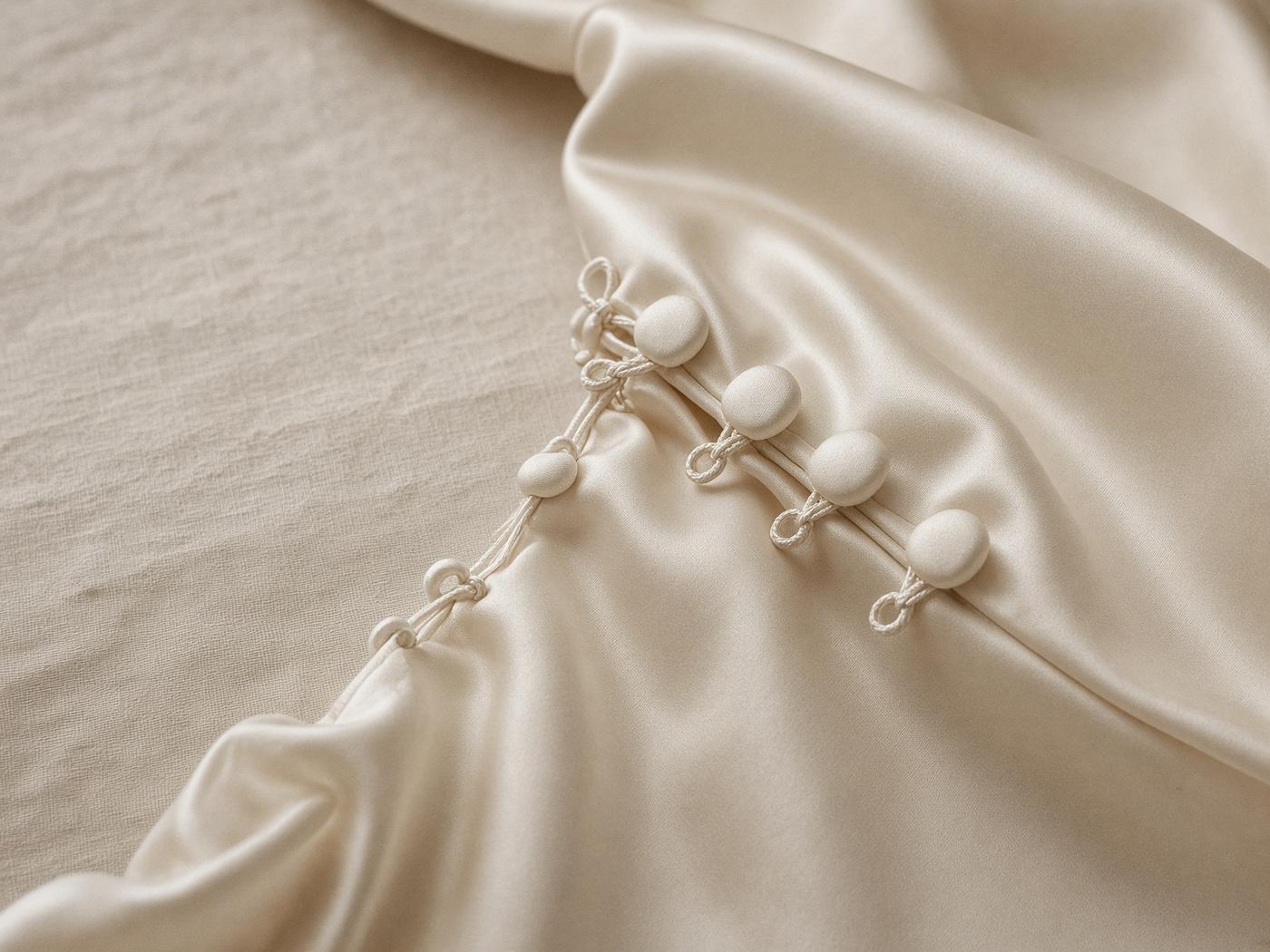
A wedding dress bustle is not a fashion trend. It is a practical system of hooks, buttons, ribbons, or ties that lifts extra fabric off the floor and secures it into the back of the dress. Once you know the main wedding dress bustle styles, the fitting-room talk gets calmer, and so does the day-of handoff to whoever lifts that train.
What Is a Wedding Dress Bustle?
What is a wedding dress bustle? In plain terms, it is how you gather the train (or any trailing fabric) up and fasten it so the hem clears the ground for the rest of the celebration. Per The Knot's guide to what a bustle is, the point is simple: keep that fabric from dragging all night.
Plenty of full-length gowns with trains get this treatment at alterations, not only ball gowns. Chapel, cathedral, or even a modest sweep usually sparks the conversation. Floor-length with no train? Skip the chapter. No train means no bustle.
Think of it as the gown's second act. The aisle asks for length. The reception asks for mobility. The bustle is how one dress does both, unless you prefer a detachable wedding dress train or a second shorter look.
Wedding Dress Bustle Types at a Glance
Here is the map I sketch when wedding dress bustle types start to blur. Names vary by salon, but these are the ones you will hear most often.
| Type | How it looks | Difficulty for helpers | Best known for |
|---|---|---|---|
| American (over) bustle | Train lifts over the back toward the waist; cascading folds | Usually easiest | Simple, traditional, quick day-of pickup |
| French (under) bustle | Train folds under; ribbons or numbered hooks match | Needs practice | Clean, understated two-layer hem |
| Ballroom bustle | Several under points hide the train | Intermediate | Looks like a floor-length gown left untouched |
| Royal / Victorian | Singular or multiple pickups for dimension | Varies | Extra drama and shape at the back |
| Bow bustle | Train secured under a statement bow | Depends on the gown | Gowns that already wear a big bow |
| Detachable train | Train removes after ceremony or photos | Easy once unclipped | No fabric to manage at the reception |
Those are the core types of wedding dress bustles you decide among in alterations. American, French, and ballroom cover most real weddings. Royal, Victorian, and bow styles show up when the dress design asks for them.
American Bustle vs French Bustle
When brides ask about American bustle vs French bustle, they are choosing between visible folds over the back and neat fabric tucked underneath. Both work. They read differently in photos and feel different to the person fastening them.
An American bustle (also called an over or traditional bustle) lifts the train and secures it over the back toward the waistline. You get cascading folds on the outside. It can use one pickup point or several, depending on how much fabric you need to clear. Seamstresses like the construction. Day-of helpers like that the attachments are usually easy to see and reach.
A French bustle (the under bustle) folds the train under itself and fastens from the inside, often with ribbons or numbered hooks so the helper knows which point meets which. Done well, you get an understated two-layer hem rather than a cascade on top. Maggie Sottero's overview of wedding dress bustles puts the contrast plainly: over styles show the lift; under styles hide it.
The honest trade-off: the American bustle is often easiest for a nervous bridesmaid. The French bustle looks quietly polished, especially on a detailed back you do not want to cover, but it can intimidate helpers without practice. If you love French, budget rehearsal time. Do not invent the system in a hallway five minutes before guests arrive.
In short for American bustle vs French bustle: over is usually simpler and more visible; under is cleaner and more practice-dependent. Neither is "more bridal." Match the style to the dress and to the human who will lift it.
Ballroom, Royal, and the Detachable-Train Alternative
A ballroom bustle wedding dress setup uses several under points to hide the train so thoroughly the gown can look like a floor-length dress that never had a train. I raise it when a bride wants aisle drama without a permanently "bustled" look for dinner and dancing. It flatters many silhouettes and sits at intermediate difficulty: more points than a single American pickup, still manageable if someone practiced at the final fitting.
Royal and Victorian bustles get a lighter mention. They use a singular pickup or multiple pickups for more dimension and drama at the back. If your dress is theatrical and your seamstress suggests one of these wedding dress bustle styles for shape rather than simple clearance, listen. Let the gown's architecture decide how the fabric wants to sit.
A bow bustle is for gowns with a statement bow: the train secures under that bow so the design stays the star. Optional and gown-specific. Ask if your dress already has a big bow looking purposeful.
Not every bride bustles. A detachable wedding dress train is a clean alternative. Wear it for ceremony and portraits, then remove it for the reception. Some couples prefer a second shorter dress. Both skip the "who knows how to bustle this?" logistics. The trade-off is a change moment on the timeline and a place to hang the train once it comes off.
Wrist loops deserve a reality check. They are meant for hanging the train on a hanger in a garment bag, not as an all-night arm carry. Kalayjian, via The Knot, is clear on that, and I agree. If someone offers to loop it on your wrist for dancing, smile and ask for a real bustle instead.
Matching Bustle to Silhouette and Train
Your guide to finding the perfect wedding dress already covered silhouette and fabric. The bustle should follow that choice, not fight it.
Bridal consensus lines up roughly like this. Ballgown and A-line dresses often pair well with an American or ballroom bustle. There is volume to work with, and cascading folds or a hidden multi-point underlift both make sense. Mermaid and fit-and-flare dresses often favor a French bustle, because tucking fabric under keeps the back line sleek. Detailed backs (lace illusion, buttons down the spine) tend to favor under styles so you do not cover the design you paid for.
Fabric matters too. Heavy satin behaves differently from airy tulle or lace. Your seamstress will recommend by silhouette, fabric, and how you will wear the dress after the aisle. Bring that plan. "I want to move freely by dinner" helps. "Surprise me" does not.
Train length sets the stakes. A short sweep may need only a simple pickup. Chapel or cathedral usually needs a more intentional system, sometimes more than one point. If you are also wearing a long veil for the processional, aisle length and after-aisle length are different jobs. Pair the train talk lightly with wedding veil lengths: a cathedral veil and cathedral train are gorgeous walking in, and both want a clear plan once the photos wrap.
When the Decision Happens
Do I need a bustle for my wedding dress? If you have a train you intend to keep on for the reception, yes, or you need a detachable train or second-dress plan that replaces it. The decision happens in alterations, not on Pinterest the week of the wedding.
Your seamstress recommends by silhouette, fabric, and how you will actually wear the gown. Come with preferences ("I love a clean hem" or "I do not mind visible folds"), then let them tell you what the dress can support. Zola's advice on how to bustle a wedding dress lands where planners do: this is a fitting decision, not a day-of improvisation.
When do you bustle a wedding dress on the timeline? Plan the when and where between ceremony and reception. Common windows are before cocktail hour or after portraits wrap. Put it on your wedding day timeline as a real beat with a real location: a quiet suite or side room with a mirror and enough space to kneel. Decide whether the bustle happens before guests see you again or after outdoor frames. How long cocktail hour runs is its own question; our note on how long cocktail hour should be helps so the bustle does not collide with bar lines and passed trays.
Who Needs to Know How to Lift It
Designate one helper. One. A calm bridesmaid, a sister, a parent, someone who will not vanish into group photos when you need them. Have that person attend the final fitting. Practice there with the actual dress and hooks. Hope LaVine, via The Knot, suggests a video or notes if that helps your helper remember the sequence. I am all for it. Pride does not fasten ribbons correctly under pressure. A thirty-second phone video does.
Walk through how to bustle a wedding dress the way you will do it on the day: standing or seated, counting points in order. French systems with numbered ribbons especially repay rehearsal. Ballroom setups with several under points do too. Even an American bustle benefits from one clean practice run so nobody hunts for a hidden button while the photographer waits.
Share the plan with your planner or coordinator. Good wedding etiquette here is mostly kindness to the people supporting you: clear roles, practiced steps, and enough time that nobody is rushing. If your helper cannot make the final fitting, schedule a separate practice or rely on that video plus written notes from the seamstress. Do not assume someone in the wedding party will figure it out. Someone will figure it out poorly, and you will feel every crooked fold in the photos.
FAQ
What is a wedding dress bustle, really?
It is the system that secures your train or extra fabric up into the back of the dress so it does not drag for the rest of the night. Hooks, buttons, ribbons, and ties are the usual tools. The goal is clearance and comfort, though some bustles also change how the back looks.
Do I need a bustle for my wedding dress if the train is short?
Often yes, if that fabric still hits the floor while you walk and dance. A short sweep can catch heels and collect dust just like a longer train. Truly floor-length with no train? Skip it. Ask your seamstress while you move in the gown at fittings rather than guessing from a hanger photo.
When do you bustle a wedding dress on the wedding day?
Usually between ceremony and reception: before cocktail hour, after portraits, or in a quiet window your timeline protects. Decide early and put a helper and a location on the schedule. Bustling in a crowded hallway is how ribbons get mismatched.
Is an American bustle easier than a French bustle?
Usually. An American (over) bustle is often the simplest for day-of helpers to see and fasten. A French (under) bustle looks clean but needs practice, especially when ribbons or numbers have to match. A ballroom bustle sits in the middle because it uses several under points.
Can I skip bustling with a detachable wedding dress train?
Yes. Remove the train after the ceremony or photos and you are done managing that fabric. A second shorter reception dress works the same way. Plan the change moment and a safe place for the detached pieces.
Wedding dress bustle types are not a personality test. They are a fit between fabric, silhouette, and the hours after you walk back up the aisle. Choose with your seamstress, practice with one designated helper, and put the lift on the timeline like any other moment that keeps the day graceful. When the train finally clears the floor, you get ceremony theater when you want it, and a gown that lets you stay in the party for everything that comes next.