
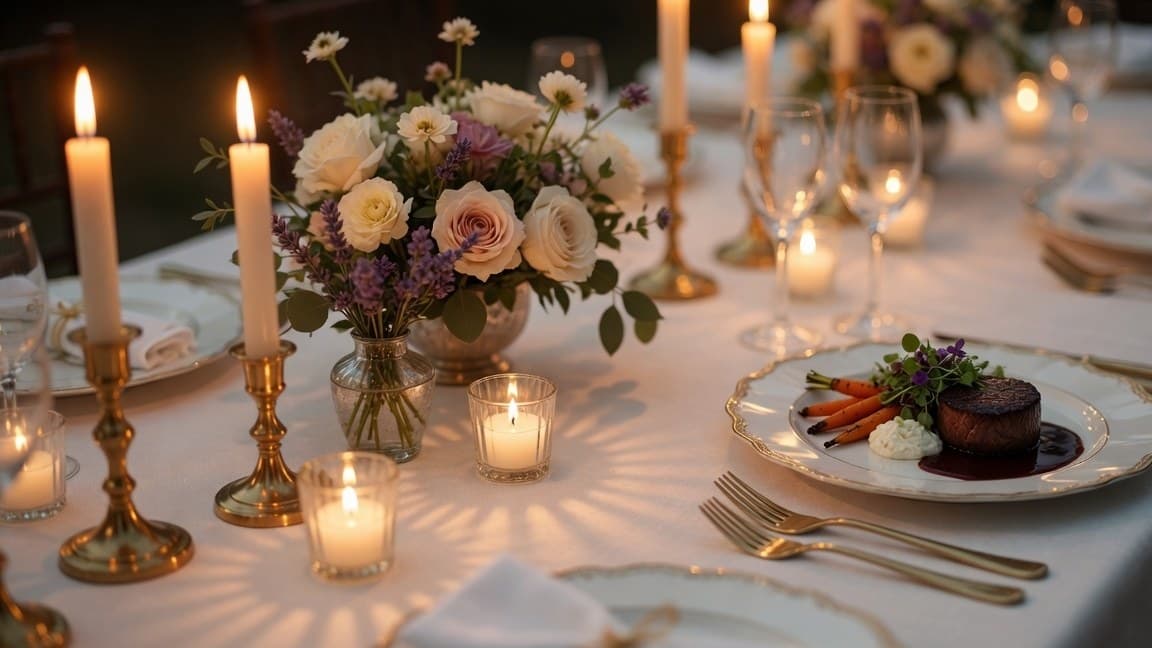
The dinner hour is not a catering checkbox. It is the stretch where your guests finally sit, talk, and decide how the night feels. The service style you choose quietly sets that stretch: how long people wait, whether they leave their chairs, what the RSVP card asks, and how the room sounds while everyone eats.
Here is the short answer. You are choosing among plated (including a duet plate), buffet (including stations), and family style. Each one changes the timeline, the tables, dietary handling, and the feel of the room. Cost matters, but staffing and menu can flip the usual "buffet is cheaper, plated costs more" story, as The Knot and Brides both note.
Dinner follows cocktail hour. This piece starts when people sit for the meal.
Plated Dinner (and the Duet Plate)
A plated dinner is the most formal of the three. Servers bring composed courses to seated guests. Brides describes the usual shape as an appetizer and an entrée, with dessert tableside if you want it. WeddingWire calls it the most traditional style, and the one that usually asks for the most staff.
Timeline. Juls Sharpley, quoted by The Knot, says even efficient teams take between 90 minutes and two hours to serve a three-course meal to average guest counts, with toasts and special dances folded into that window. Brides notes that servers usually wait seven to 10 minutes after guests finish a course before bringing the next. As a staffing rule of thumb, Brides suggests about one server for every 10 to 15 guests, or about two tables.
Tables and centerpieces. Place settings stay clear of shared platters, so florals can be taller or more elaborate than under family style. The room feels synchronized: tables finish together, conversation stays seated, and the night can move course by course.
RSVP and entrée choices. Kevin Dennis, quoted by The Knot, says couples typically limit selections to two proteins and a vegetarian choice, and need to know who is having what ahead of time. Brides lays out three patterns: the same entrée for everyone plus a vegetarian or vegan plate; a short menu; or a preselected choice on the reply card. An original line that works: "Dinner: ___ chicken ___ fish ___ garden." Put meal marks where servers will see them; see escort cards vs place cards. When replies are due belongs in the RSVP deadline piece.
The duet plate. Brandy Boulette of The Treasury Venue Collection, quoted on Treasury on the Plaza, describes a duet plate as two proteins on one plate so you do not collect meal selections on the RSVPs. Agape Planning frames it the same way: half portions of two meats with sides, chosen by you in advance. Guests are not given an entrée choice. You still leave space on the reply card for dietary restrictions.
Plated service gives the kitchen the cleanest path for allergy plates, because each dish is composed for a named guest.
Buffet (and Stations)
A buffet is more casual. Guests serve themselves from a line, or attendants portion from it, and the room eats in waves rather than as one course. The Knot notes that some couples plate a salad at the table and then open the buffet for mains. Brides' buffet guide makes the same hybrid suggestion: salad and bread tableside, then the line for the rest.
Timeline. Vijay Goel, quoted by The Knot, says a buffet needs extra time built into dinner so everyone can get food before speeches start. There is no hard minute band from the major wedding sites for buffet length. Plan for movement, not a single plated rhythm.
Logistics. Brides suggests accounting for about one buffet table for every 50 guests, and using double-sided tables to cut wait times. For staffing, Brides' service-styles FAQ recommends about one server for every 25 guests on a buffet or at food stations. Sharpley, again via The Knot, often recommends a buffet for guest counts over about 250, mainly because of how many meals would otherwise need to land at once. Treat that as one planner's view, not a law.
Stations vs buffet. Stations are themed or chef-attended pockets rather than one long line. Elizabeth Van Nuys of Chef's Garden, quoted on Treasury, likes scattering them as "strolling" mini-buffets when the room allows. Nancy Parragué of Paula LeDuc Fine Catering, quoted by Brides, suggests about three stations for about 250 guests (for example two self-serve and one chef-attended), with about one access point per 50 guests. Brides notes station menu pricing sits near buffet or family style, while rentals and chef stations raise the bill.
Tables, RSVP, and feel. Guest tables stay freer for florals because the food lives elsewhere. Skip entrée choices on the reply card, but leave space for dietary needs (Brides). Guests personalize at the line. The room feels looser as people stand and talk. The trade-off is mobility: lines can be harder for small children and for guests who prefer not to navigate a crowded path with a plate.
Family Style
Family style sits between the other two. Large platters arrive at the table. Guests pass and serve themselves while they stay seated. The Knot's family-style guide compares it to Thanksgiving: empty plates at each setting, food meant to be shared. WeddingWire likes the inclusive feel and places the cost between full plated staff and a buffet.
Timeline. The Knot's experts say family style tends to be quicker than a buffet because guests never join a line. Olivia Gonzalez of EFS Catering, quoted on Treasury, calls family style the fastest of the three, with slightly more staff than a buffet and slightly less than plated.
Tables and centerpieces. Platters need real estate. Brides is blunt: if you want elaborate florals on the tables, this may not be your best option. WeddingWire adds extra serveware and rentals to the checklist. Ask for larger tables or lower arrangements so people can still see across the room.
Menu shape. David Gooch, quoted by The Knot, builds many family-style menus around two proteins, two vegetables, and two starches, plus bread. Parragué, via Brides, keeps the main course lean: one or two proteins with several sides.
RSVP and dietary needs. You usually skip a per-guest entrée pick. You still collect dietary notes. WeddingWire flags shared platters as the weakest path for allergies because of cross-contamination. For guests with serious restrictions, plan a separate plated plate rather than asking them to navigate shared spoons.
Room feel. Passing dishes warms a table of strangers, which The Knot and EFS both celebrate. The Knot also names the caveat: some guests are not comfortable sharing with people they have just met. Seat thoughtfully.
What Quietly Changes When You Pick a Style
Cost, said honestly. WeddingWire's glossary says plated is usually the priciest style because of staff, and that most caterers call buffet the least expensive. That pattern holds until the menu fights it. Sarah Chianese, quoted by The Knot, notes caterers often prepare about 20 percent more food for a buffet than for plated service. Parragué, via Brides, expects family-style and buffet food to run about 10 to 30 percent more than plated, while buffet staffing can run about 20 percent less. Chef stations and extra rentals can climb again. Ask for the same menu priced three ways before you decide, and put catering on its own line in your budget checklist.
The RSVP card. Plated service, unless you choose a duet, needs meal choices. Buffet, stations, and family style usually need dietary space only. The date those replies are due lives in the RSVP deadline post.
Seating stationery. Plated dual-entrée service likes meal marks at the seat. See escort cards vs place cards. Buffet and family style can often stop at table assignment. Who sits at the front of the room is its own choice; that belongs to sweetheart table vs head table.
The day-of map. Put dinner length on your wedding day timeline. Speeches wait until the room is fed, especially with a buffet line still moving.
A Decision Guide by Guest Count, Venue, and the Night You Want
Guest count. Smaller seated rooms take plated or family style cleanly. As numbers climb, buffet or scattered stations protect the timeline. Sharpley's view, via The Knot, often points to buffet above about 250 guests. Use that as a cue from one planner, then listen to your caterer and your room.
Venue. A tight ballroom with no buffet alley favors plated or family style. Open halls and outdoor spaces favor a line or strolling stations. Confirm kitchen space and whether the venue charges for extra staff or rentals before you commit.
The night you want. Black-tie quiet conversation points to plated, or to a duet if you want plated calm without entrée homework. Warm, pass-the-dish hospitality points to family style. Choice, movement, and a looser room point to buffet or stations.
Three questions I ask couples: "Do we want everyone eating at the same time?" "Do we want guests to leave their chairs?" "Where will the platters or the line live in this room?"
One short pointer: a cocktail-style reception, with passed bites and stations and little or no seated dinner, is a different night. Brides covers it. This piece stays with the three seated-meal paths.
FAQ
What is a plated dinner at a wedding?
Servers bring composed courses to seated guests. Brides describes the typical shape as an appetizer and an entrée, with dessert tableside optional.
What is a duet plate?
Two smaller proteins on one plate, chosen by you in advance, so guests do not pick an entrée on the RSVP. Boulette (via Treasury) and Agape Planning both describe it that way. Still collect dietary needs.
What is a family style dinner at a wedding?
Platters of food arrive at the table. Guests pass and serve themselves while seated, as The Knot and WeddingWire both explain.
Is a buffet cheaper than plated?
Often on staff, not always on food. WeddingWire puts plated at the high end and buffet at the low end for most caterers. The Knot and Brides show how food volume or chef stations can flip the math.
How many entrée choices should you offer?
A common plated plan is two proteins plus vegetarian, per Dennis via The Knot. You can also serve one entrée plus a plant-based plate, or skip choice entirely with a duet.
How long does a plated wedding dinner take?
About 90 minutes to two hours for three courses, according to Sharpley via The Knot. Brides adds that servers often wait seven to 10 minutes between courses.
Do buffet or family style need meal choices on the RSVP?
Usually no entrée pick. Always leave space for dietary needs, as Brides recommends.
What are wedding food stations?
Themed or chef-attended service points, often scattered through the room. Related to buffet, with their own space and rental costs, per Brides and Treasury.
Checklist
- Ask the caterer for the same menu priced plated, buffet, and family style.
- Walk the room: where does a line or a station fit, and what happens to the centerpieces if platters land on the tables.
- Decide entrée choice vs duet vs open buffet before you print reply cards.
- Leave dietary space on every RSVP path.
- Put dinner length and speech timing on the day-of timeline after you pick a style.
- Confirm staffing ratios and rental pieces in the contract.
The right service style is the one that matches how you want people to feel while they eat, not the one that won a poll. Plated holds the room still. Buffet and stations let it move. Family style puts the meal in everyone's hands.
Once the style is set, the rest of the night has a clear place to land. Toasts and dancing wait on a room that has been fed with intention. Choose the quieter option if it is yours, or the looser one if that is the night you want. Then let dinner do its quiet work.