
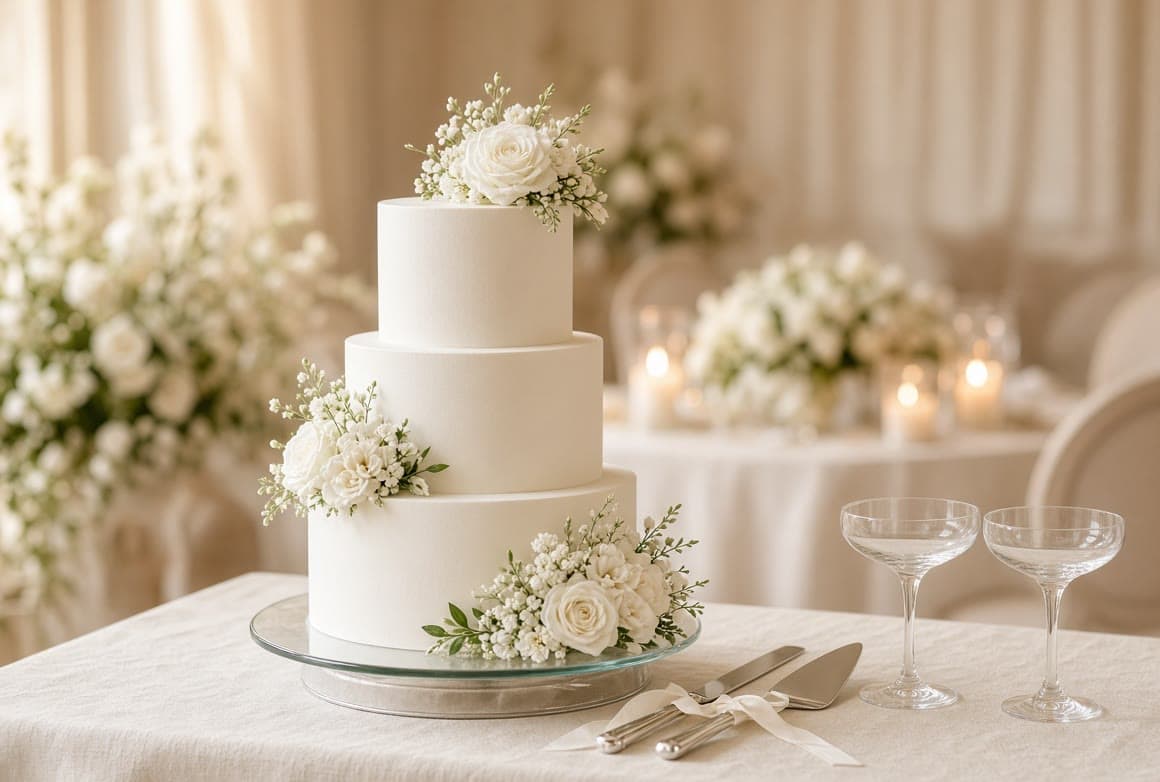
A wedding cake cutting looks like ten minutes and a photograph. It is also a hinge in the night. It can turn dinner into dessert, sitting into dancing, and give older guests or families with children a natural moment to leave without feeling they missed the formal night.
There is no single required time. In many American receptions, the classic slot is after dinner and the toasts, just before dancing, as The Knot, Brides, and WeddingWire most often recommend. Other receptions do it right after the grand entrance, in pretty evening light, or later as a second wind. Plan a 10 to 15 minute window, not an exact minute. You do not have to do it. For the rest of the day's clock, see Nailing the Wedding Day Timeline.
The Four Usual Times, and Which Reception Each Suits
The best time is the one that fits the night you are hosting. The map below is a guide, not a set of rules.
| Time slot | Reception it often suits | What to watch |
|---|---|---|
| Right after the grand entrance | A tighter timeline, or cake served as plated dessert | Can feel early as a leave signal if toasts and dances are still ahead |
| After dinner and toasts, before dancing | A classic sit-down dinner; guests still seated | Needs a plan if speeches run long |
| Golden hour, for photographs | An outdoor or late-afternoon wedding when the light matters | Major US guides rarely name this slot; the ceremonial cut may be separate from serving |
| Late night, as a second wind | A dance-forward party that wants cake as an intermission | Some guests may already have left; the kitchen still has to serve |
You can cut before dinner. The traditional American answer, in current guides, is after the meal and the toasts, before dancing.
Right after the grand entrance, or as you are announced into dinner, suits a tighter timeline, or cake served as dessert after the kitchen has time to slice, a path Brides, The Knot, Hitched, and Zola all describe. If you want a first dance as you enter, keep it as its own beat; see how long a first dance should be. Planner Ophelia Childress, quoted in The Knot, notes that some guests treat the cut as a sign the night is winding down, and may leave before speeches if you cut too soon.
After dinner and toasts, before dancing, is the classic. Guests are still seated, photographs are easier, and caterers can plate before dancing starts. Planner McKenna Shano, quoted in WeddingWire's reception order, likes finishing the cut before dancing starts, so the party is not interrupted later. Older guests waiting for the last formality can then leave, a courtesy Brides and Emily Post's cake-cutting advice still describe. How you serve dinner changes when the room is free; see plated versus buffet. Childress's sample has dinner at 6 p.m. and a cake announcement around 7:45 p.m., one planner's example, not a rule.
Golden hour is a photo-led option, not a traditional slot in the major American guides, which talk instead about cutting while the photographer is still on the clock. Some couples still step outside, or to a window, for a short ceremonial slice in pretty evening light, then send the cake back to the kitchen. A wedding photographer's case for a private cake cutting makes a similar case for a quiet cocktail-hour cut, when the room and the light are still calm: adjacent practice, not the same named slot. Coordinate the window with the photographer, and tell the caterer when service should start.
Late night suits a dance-forward party that wants cake as an intermission. The Knot's reception timeline puts cake cutting about an hour before the end in one sample. Zola treats the last hour as a close, or as sugar for more dancing. The risk, named in that Knot timeline and in Brides' reception timeline, is that a public cut can tell people the night is winding down. If you want the energy without emptying the floor, planner Elizabeth Bailey, quoted in The Knot, typically does not stop the party and treats the cut as a photo opportunity only. Keep the send-off as a later goodbye.
How the Caterer, the Photographer, and the Toasts Set the Clock
The ceremonial slice is short. The work around it is not. Ask the baker or caterer where to put the knife, usually in the bottom tier, and who will finish the cutting in the kitchen, as The Knot's cake-cutting guide, Brides, and Emily Post describe. A display cake plus a sheet cake behind the scenes can feed a larger room, as The Knot notes.
The photographer needs to be in place, with a usable background, and still on the clock. An earlier window can protect a coverage end time; a later one only works if coverage runs that late. Go slowly enough for a few frames, as Zola advises.
Toasts usually belong during dinner and before the cake, so people do not leave mid-speech, which is Childress's advice in The Knot. For length and kindness to speakers, see wedding speech ideas.
Plan a 10 to 15 minute window, not a pinned minute. Emily Post times the cut just before dessert is served, so guests are not left waiting late for one last formality. Other guides warn against cutting so early that the party folds before you are ready. Neither is a universal rule; the kind of night you want is the tie-breaker. Give the DJ or MC a short heads-up so guests can gather.
When speeches run long, do not cut during a toast. Slide the window to after the last speech. If dancing has already started, take a short pause or keep the cut low-key. Tell the planner, DJ, photographer, and caterer this rule in advance.
What the Tradition Is Meant to Say, and Whether You Must Do It
Why do couples cut the cake together? Popular wedding guides often tell a tidy story. The Knot's cake-cutting guide traces a loaf or cake broken over the bride's head to ancient Rome, then a Victorian bride who cut and served a bride's cake, then a second pair of hands as guest lists and cakes grew. Those same guides describe two hands on the knife as a first shared task and a promise of support, and the offered bite as a sign of providing for one another.
Food historians tell a less tidy story. In Gastronomica, Carol Wilson follows a long chain of wedding breads, pies, stacked buns, and later iced cakes, and NPR notes that today's white tiered cake is fairly modern. Treat the popular account as what guides often say, not as one unbroken ritual.
What the gesture is meant to say, now, can stay simpler: you are doing this together, and offering a bite, not performing a trick. That is the spirit of Emily Post's advice, and of The Knot's note that you do not have to smear frosting on anyone.
Who cuts the cake? Both partners, one standing closer, the other behind, both hands on the knife. A traditional bride-and-groom version puts the groom's hand lower and the bride's on top. Childress calls that old caretaking reading dated, and says you may cut together or switch. The couple usually cut only the first slice. Staff cut and serve the rest.
You do not have to do it. A private cut, with the photographer and perhaps a catering captain, keeps dessert on schedule without stopping the party. A small display cake plus a kitchen sheet cake still feeds the room. You may skip the ceremony, and even skip cake, so long as guests still have dessert if they expect it, which is the permission Brides and Emily Post both give.
The Song, the Knife, a Short Announcement, and the Smash You May Not Want
Choose the song in advance with the DJ or band. Its job is to gather the room and set a tone, not to become a second first dance. Guides often suggest something short, familiar, and either playful or personally meaningful. You do not need a ranked list.
Use whatever knife the baker or venue provides, unless you already have one you like. Cut the bottom tier, press rather than saw, and let staff finish the cake.
Someone should tell the room, usually the DJ, MC, or a member of the wedding party. The couple does not need a cake speech, as Brides notes. If you want wording for your MC, here is an original example, not a required script: "If I could have your attention for a few minutes: [names] are going to cut the cake, just over here. Come in close if you would like a look, then we will get back to the night." The Knot also suggests a simple heads-up: the couple plans to cut the cake in the next ten minutes, with the place named.
Agree on the smash beforehand. You do not owe guests a face full of frosting. If you have not discussed it, assume you will not smash, as Zola advises. Emily Post advises offering the bite, because the moment is meant to show care and trust. Have napkins or a damp cloth nearby either way.
In many UK receptions, evening guests arrive after the wedding breakfast, so couples often cut just before the first dance so those later arrivals can see it, as Hitched describes. A typical US guest list is usually in the room all evening, which is why the American classic sits after dinner.
If the cake comes from an outside bakery, some venues charge a cake-cutting fee, also called a cakeage fee, for staff to slice, plate, and serve, as The Knot's fee guide explains. Ask the venue and caterer, before you sign, whether it is included.
FAQ
When do you cut the cake at a wedding?
There is no single required time. The classic American slot is after dinner and the toasts, before dancing. Other good slots are right after the entrance, in pretty evening light, or later as a second wind.
When do you traditionally cut the cake?
Guides still treat the post-dinner, pre-dancing slot as the usual tradition. Older etiquette treated the cut as the last official event, so some receptions place it later.
Do you cut the cake before dinner?
You can, especially if the kitchen needs time to serve cake as dessert, or if photographer coverage ends early. Watch the leave-ok signal if speeches are still ahead.
Do you have to cut the cake at a wedding?
No. You can cut privately, use a display cake plus a sheet cake, or skip the ceremony and still serve dessert.
Who cuts the cake?
The couple cut the first slice together. The caterer or venue staff usually cut and serve the rest.
Why do couples cut the cake together, and what does feeding each other mean?
Popular guides describe it as a first shared task and a way of offering care. You may keep the gesture simple, and you do not have to smash the cake.
What do you say, and is there a cake-cutting speech?
A short announcement from the DJ, MC, or wedding party is enough. The couple does not need a speech.
What if the speeches run long?
Wait until the last toast ends, then use the window. If dancing has started, keep the cut short or quiet.
Is there a cake-cutting fee?
Sometimes, especially when the cake comes from outside the venue. Ask before you book.
Checklist
- Choose a slot that fits the night: classic, early, golden hour, or late.
- Put a 10 to 15 minute window on the vendor timeline, not a single minute.
- Tell the caterer, photographer, and DJ or MC, including a plan if toasts run long.
- Agree with your partner about feeding each other, and about a smash or not.
- Choose a short, familiar song, or none.
- Ask the venue whether a cake-cutting fee applies if the baker is outside.
- Decide whether the moment is public, private, or skipped.
Ten minutes can change the temperature of a room. Used kindly, the cake cutting lets dinner become dessert, sitting become dancing, and the people who need to go home go home with the feeling that they saw the night through.
You do not have to stage the moment if it is not yours. Cut it in public, cut it quietly, or skip it and still serve something sweet. The reception will tell you when the hinge should swing, if you leave it a little room.