
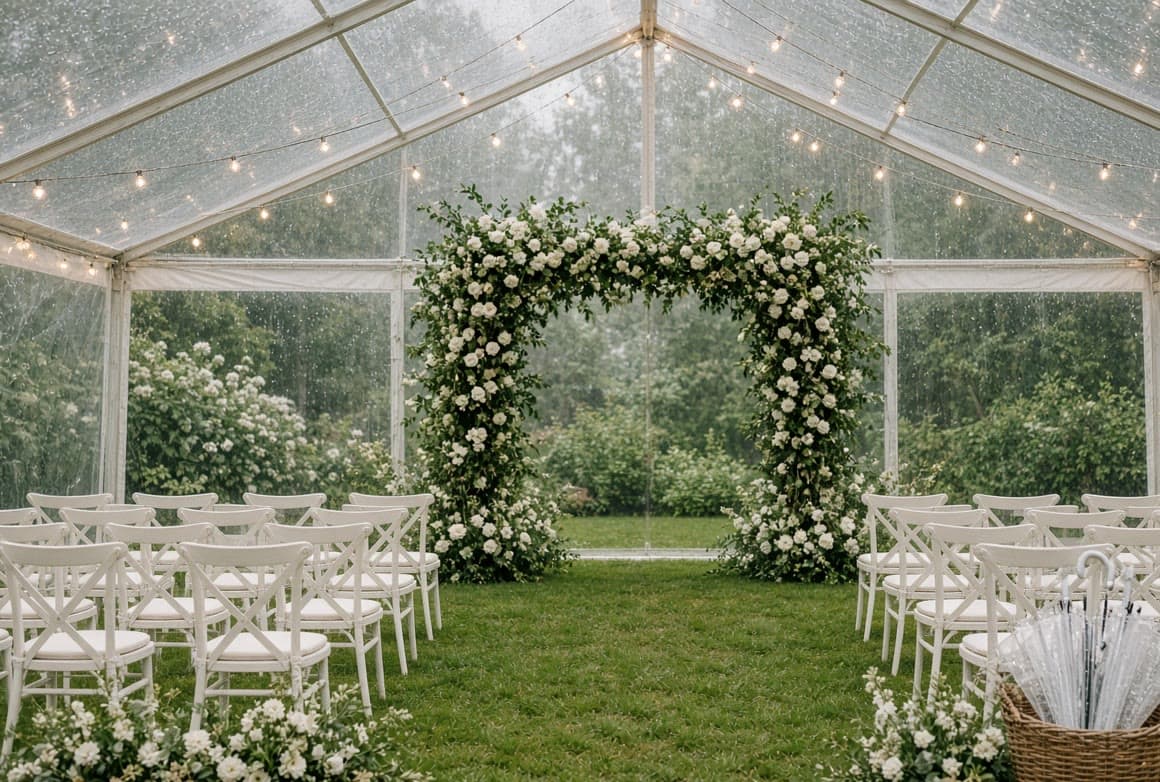
A rain plan for an outdoor wedding is not a disaster script. It is a second version of the day, designed as carefully as the first, so your guests stay comfortable and you are not asked to make a frightened call in formal clothes.
Every outdoor ceremony, reception, or backyard gathering needs a backup. The calmest time to choose it is before you book the venue. On the tour, ask what the indoor backup is, and walk that room as seriously as the lawn.
You can still love an outdoor day. The plan simply means the sky does not get the last word. For the rest of the day's clock, see Nailing the Wedding Day Timeline.
Three Backup Shapes, and What Each One Actually Covers
The best backup is the one you would still be glad to host. The map below is a guide, not a set of rules.
| Backup shape | What it is for | What to confirm |
|---|---|---|
| Indoor space at the venue | The calmest full move when rain, wind, or thunder makes the lawn unkind | It must fit the real guest count, plus catering and a dance floor if you need one |
| Tent or marquee | Keeps the outdoor setting, with a roof over the same ground | A roof is not enough; ask about sides, flooring, power, and permits |
| A separate covered ceremony spot | A porch, pavilion, or nearby hall for vows, if the reception backup is different | Fine for rain cover; not a lightning shelter |
An indoor room is often the simplest Plan B at a hotel, golf club, or barn with a loft, as The Knot and Brides describe. Confirm exclusivity, outlets, and how décor and the floor plan will translate.
If a tent or marquee is the plan, reserve it early, ideally when you book the venue, as The Knot, Brides, and WeddingWire advise. Planner Christine Terezakis, quoted in WeddingWire, recommends a subfloor, because rain can run under a roof on grass. Power and a catering path still have to work. A tent is cover from rain, not shelter from lightning.
A separate covered ceremony location helps when only the vows need to move, or when the reception tent is already the plan. A porch or pavilion may serve for rain, which Brides also names as a ceremony backup. Name, separately, the enclosed building you will use if there is thunder.
A backyard wedding uses the same three shapes, except you may have to invent the indoor room, the tent, or both. Planner Christine Ferguson, quoted in Brides, notes that on a built-from-scratch site, the planner often has to create the backup from the ground up.
Choose the Venue With the Rain Plan Already in Mind
Before you book, ask two questions: "What is the indoor backup?" and "May we put up a tent, and with whom?"
Planner Jessyca Canal, quoted in The Knot, wants couples to see Plan A and Plan B on the tour, and to love both. If you are unhappy with the rain plan, the venue may not be right.
Ferguson, in Brides, says not to book if you hate the backup, if the indoor room will not hold the guests, or if a last-minute tent is not realistic. Planner Callista Osborn, also quoted in Brides, says you should be as excited about the second version as the first.
A pretty date, or a mild season, is not a substitute for a plan. Season can shape a date, as our guide to selecting a wedding date notes, but it does not replace a rain plan.
Who Decides, and When
Who decides whether to switch, and when? Name one decision-maker, usually the planner or the venue coordinator, and name an alternate. Help design and approve the plan in advance. The last-minute call is never the couple's to make.
Planner Hallea Tse, quoted in The Knot, says the planner can steer this ship. Canal no longer lets a couple wait in denial at the last minute. Planner Adriana Gorman, quoted in Brides, advises letting the vendor team make the adjustments once the plan is set.
There is no magic rain percentage that settles it.
The Knot suggests starting to watch when the 10-day forecast comes into view, which is a watch, not a final call. Osborn, in Brides, says a few days before the wedding, decide whether to implement the plan, perhaps in layers: umbrellas in a light rain, a full indoor move in a heavier one. You have permission to use some parts of the plan and not others. Tent reserve and cancel windows belong to the rental company. Ask what they are.
In my own practice, I use a tighter sequence, as a habit, not as a universal rule. About three days out, watch the trend and confirm that the backup is actually available. One to two days out, settle the tent, the flooring, and any other rentals that can still move. The morning of, make only smaller changes. One to two hours before guests arrive, do a final check of the path, the chairs, and the sky.
Guest safety and comfort outrank a lawn photograph, which is also The Knot's priority.
What to Ask the Venue, the Photographer, the Caterer, and the Rental Team
Ask the venue where the backup is, whether you have it exclusively, what it costs to hold or to flip the room, how long a move takes, and who has authority on the day. Ask about fees before you sign.
Ask the photographer for covered or indoor portrait spots, and how they like to use overcast light. If portraits, or a first look, may shift, see first look versus no first look.
Ask how sound and power will work. A backup room needs outlets. A tent or a field may need a generator, which Ferguson, in Brides, and WeddingWire both flag. Musicians and speakers need cover, and an outdoor ceremony may still need a microphone, as WeddingWire's outdoor planning tips note.
Ask the caterer for a new layout, a dry path for food, and whether service can still be plated or passed after a move.
Ask the rental company about lead times, whether a tent can be reserved now and confirmed later, and what sides, floors, walkways, and lighting require. WeddingWire's tented-wedding guide, quoting planner Wendy Prindle, suggests reserving a backup tent from the start, or at least two or three months ahead, because inventory disappears when weather turns.
If the ceremony itself gets shorter, or reseated, indoors, see how long a wedding ceremony should be.
Taking Care of Guests, and How You Tell Them
Think about comfort, not a shopping list. Planner Alicia Mae, quoted in Brides' wedding-day rain tips, suggests a clear umbrella so it does not conceal the clothes, and says clear umbrellas protect you and look great in photos. A pale or white umbrella is a similar idea if you prefer a softer frame. Have a basket or stand for wet umbrellas, towels or cloths for wet chairs, and mats or covered walkways where guests will walk. On grass, heel protectors help, which Eva Clark, also quoted in Brides, and Terezakis, in WeddingWire, both recommend.
Plan an accessible route for anyone with limited mobility, including if the lawn becomes mud, which is part of Ferguson's guest-comfort advice in Brides.
On the wedding website, put a short weather and shoe note, and ask guests to check that page, or a text, if plans change, as WeddingWire recommends. If the location actually changes, update the website, and send a morning text, or a note from the planner.
Original example wording, not a required script, for the website: "If the weather requires it, the ceremony will move indoors at the same venue. Check this page the morning of the wedding, or watch for a text."
Original example wording for a morning text: "Good morning. We are moving the ceremony indoors, to [room or building] at the same venue. The start time is still [time]. Please come in through [entrance]. We are so glad you will be with us. [Names]"
Hair and makeup in humidity is another chapter; see the hair and makeup timeline.
If There Is Lightning
If you hear thunder, lightning is close enough to strike you, according to the National Weather Service lightning safety page and its tips and outdoors guidance. Stop outdoor activity at the first thunder, and move everyone to a substantial enclosed building with electricity or plumbing, or into an enclosed, metal-topped vehicle with the windows up. Tents, open pavilions, and porches do not protect you. Name that real building, or the parking plan, before the day. Stay there at least 30 minutes after the last thunder.
Rain in the Photographs, and the Old Idea of Good Luck
Overcast light can be kind to faces and to a white dress, which is why Gorman, quoted in Brides on whether rain is good luck, calls an overcast forecast excellent for pictures. A shared umbrella can be a portrait, not only a cover, which Brides also shows in its rainy wedding photographs. Work this out with the photographer in advance.
"Rain on your wedding day is good luck" is a saying, not a forecast. In Italian folk belief, collected in the Dartmouth Folklore Archive, "sposa bagnata, sposa fortunata" means a rained-upon bride is a lucky bride. Popular wedding guides often add other origin stories. Treat those as folklore too, not as settled history.
You do not have to believe in luck. Planner Michelle Norwood, also quoted in Brides, puts the emphasis on how you meet the day, not on a charm. Let the weather be part of the story if it comes, and let the second version of the day be worthy of it. WeddingWire offers a small kindness here: pick three things you love about Plan B, so it does not feel like a consolation.
FAQ
What is an outdoor wedding rain plan?
A designed second version of the day: where you will go, who will decide, and how guests will be told, if the sky changes.
Do I need a rain plan if the forecast looks clear?
Yes, if any part of the day is outdoors. Forecasts change, and the calm work happens before the week of the wedding.
What should I ask a venue before I book?
"What is the indoor backup?" Then walk that space, and ask whether a tent is allowed.
Who decides whether to switch, and when?
A named decision-maker, usually the planner or venue coordinator, plus an alternate. The last-minute call is never the couple's. Confirm in stages. There is no single rain percentage that settles it.
Is a tent enough?
A tent can be an excellent rain cover if it has sides, flooring, and power as needed. It is not protection from lightning.
What do I tell guests?
Put a weather and shoe note on the website, and send a short morning message if the location changes.
What if there is thunder?
Move everyone into a real enclosed building or a hard-topped vehicle. Wait 30 minutes after the last thunder. Follow National Weather Service guidance.
What if it rains on the photographs?
Overcast light can be beautiful. Plan a covered or indoor portrait spot, and a clear umbrella if you want one in the frame.
Is rain on a wedding day good luck?
It is a beloved saying in some traditions, not a fact. You may treat it as a kindness, or simply as weather.
Checklist
- Walk the indoor backup, or the tent plan, before you book the venue.
- Choose one decision-maker and an alternate; write the checkpoints into the vendor timeline.
- Ask the venue and vendors how a move would work, including fees and lead times.
- Plan guest comfort: umbrellas, a dry path, heel help, and an accessible route.
- Put a weather note on the website, and draft the morning text in advance.
- Name the enclosed lightning shelter, and the 30-minute wait, before the day.
- Tell the photographer how you want to use overcast light, or an indoor corner.
A rain plan, made early, is a quiet kindness. It lets the lawn stay the dream, and it lets the indoor room, or the tent, be a real version of the same day, not a scramble.
If the sky holds, you will hardly remember the meetings. If it does not, you will already know where to go, who will decide, and how to gather your people under a dry roof, and still have a wedding that feels like you.