
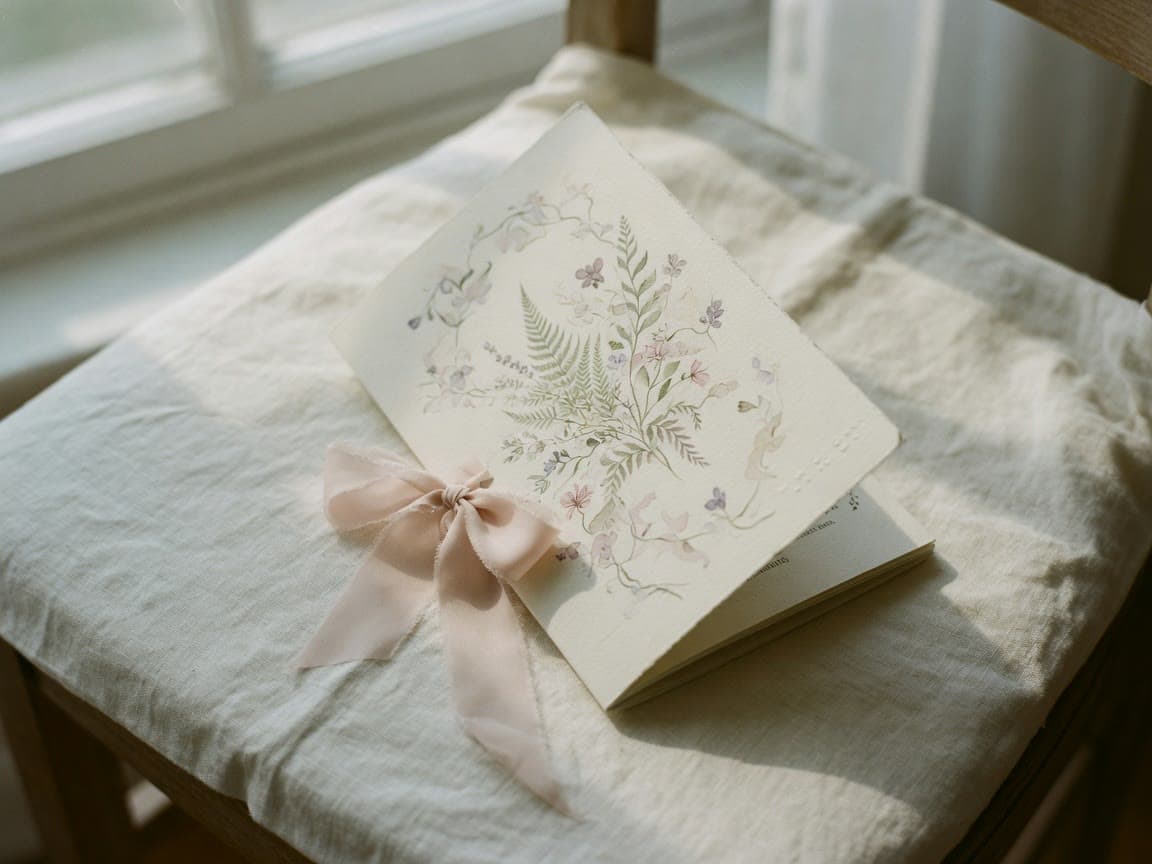
When couples ask me whether they need wedding programs, they usually think they are deciding about paper. They are not. They are deciding how guests settle into the ceremony: with a quiet map in hand, or trusting the room to explain itself. The short answer first. No, you do not have to have wedding programs.
Used well, a program is guest architecture at the start of the aisle. It names who is who, what comes next, and where a soft thank-you or memorial note can live without a speech. Below: when programs earn their keep, when a sign, QR, or website note is kinder, what to include, brief wording notes, how many to order, and church or Catholic Mass considerations. No product roundup. Just the decision.
What a Wedding Ceremony Program Quietly Does
A wedding ceremony program is a short guide guests hold (or scan) as they take their seats. Think of it once as a tiny playbill for your order of service, then set the metaphor down. In planner language, it is a calm map: names, sequence, and a few notes that help the room feel included.
What it quietly does matters more than how pretty the fold is. Early arrivals have something gentle to read. Guests who do not know your cousins learn who is walking with whom. Someone from another tradition gets one line explaining a ritual they have never seen. A memorial or thank-you can sit on the page without interrupting the vows.
What it is not matters too. A program is not a full day timeline, a reception seating tool, or a second invitation. Ceremony programs guide the service. Escort cards and place cards guide how guests find tables later. Keep those jobs separate. Zola and The Knot frame the same idea: a program helps guests follow along, not reprint the whole wedding day on cardstock.
Do You Need Wedding Programs? Permission to Skip
Do you need wedding programs? Do you need wedding ceremony programs, do you need programs at your wedding, do I need to have them at all? No. Full permission to skip.
Planners quoted by The Knot say what I say in meetings. Some couples skip for cost. Some skip because the ceremony does not need a map. Skipping is not a failure of hospitality. It is a choice that can feel kind.
Skipping often feels right when the ceremony is short and civil (roughly under twenty minutes), guests already know the wedding party, there are no congregational responses, and nothing in the ritual language will confuse the room. Budget pressure, less paper, or outdoor wind that will scatter programs are honest reasons too. For how length filters this decision, see how long a wedding ceremony should be.
The filter I use: will a guest who is not in your inner circle feel lost without a page? If not, skip with a clear conscience. Do you need ceremony programs for a wedding that is intimate, familiar, and brief? Usually not.
When Programs Earn Their Keep (vs When a Sign, QR, or Website Note Is Kinder)
When printed (or digital) programs earn their keep
Programs earn their keep when the ceremony is longer or layered: readings, music cues, more than one language, or cultural and religious elements guests may not know by heart. A large wedding party guests will not recognize without names is another reason. Church services, Mass, and participatory responses (hymns, spoken lines) almost always benefit from a page. Programs also give thank-you and memorial lines a quiet home when you do not want to speak them aloud. Multicultural or interfaith guests often appreciate one-line ritual explanations. That is guest architecture, not stationery vanity.
When a sign, QR, or website note is kinder
A short, clear ceremony with a small guest list and a cast everyone already knows rarely needs a stack of paper. Outdoor wind, rain, or a venue that hates litter can make printed programs feel unkind. Budget or eco preference points the same way. Less paper can be part of a gentler plan; our eco-friendly wedding guide covers that wider conversation. Last-minute order-of-service changes also favor digital, because a page updates faster than a reprint.
Practical alternatives to wedding programs work when you choose them on purpose: an entrance easel with the order of service, a QR to your wedding-website ceremony page, an online wedding program in the day-of FAQ, or a warm usher welcome and nothing else. The Knot notes QR and digital as real substitutes when paper does not fit. Kinder is not lesser. Kinder is clearer.
What to Include in a Wedding Program
The essentials (what information to include)
What to include in a wedding program, and what information to put on the page, should stay scannable. Guests read in the first quiet minutes, not like a novel.
Start with a cover or header: couple names, date, venue (city is enough). Then the order of service, your wedding ceremony program outline in plain language: processional, welcome, readings, vows and rings, optional unity line, pronouncement, recessional. Match your officiant's real order. Party and key roles come next: officiant, parents if you wish, attendants, readers, musicians. Listing names in processional order helps guests connect faces to names.
The Knot's inclusion list and Zola's checklist land in the same place: names, date, location, order of service, participants, and room for a thank-you or memorial if you want them. Keep the type large enough to read in soft light.
Optional lines that often earn space
Song or reading titles with who is offering them help curious guests. One line explaining a ritual they may not know is enough. If you include a unity moment, name it once and move on; ritual ideas live in our unity ceremony companion, not here. An unplugged request (phones away for the vows) is a soft guest note many rooms appreciate. A brief reception location or time helps only when the handoff is not obvious. Do not turn the program into a full reception timeline.
What to leave off
Leave off the registry, long bios, inside jokes that exclude half the room, the full vow text (list "exchange of vows" as a beat; the words belong in the moment, and how to write wedding vows is a softer conversation for another day), vendor ads, and invitation content. A program is a guide, not a scrapbook.
Wedding Program Wording Notes (Brief)
Memorial wording for deceased loved ones
Wedding program wording for deceased loved ones is optional. There is no expectation if no one has passed. If you include a memorial, place it on an inside back or closing panel, not the cover, so the opening stays warm. Two to four lines is enough: name, relationship, one gentle sentence. An illustrative pattern: "In loving memory of [Name], [relationship]. Your love is with us as we celebrate today." If you prefer a spoken moment of silence later, the program can simply name them.
Wording for those who cannot attend
Wedding program wording for those who cannot attend is separate from memorial language. Living absences (illness, distance, military, caregiving) get a soft acknowledgment if you want one. A calm pattern: "We hold in our hearts those who could not be with us today, especially [Name]." Keep it brief. Guests should never feel they are reading a guilt list.
Thank-you message wording
Wedding program thank you wording belongs in one to three sentences. Thank guests for traveling and witnessing. Optional thanks to parents or helpers can sit beside that. Save long gratitude for speeches or the website. Program thank-yous are a nod, not a toast. Soft guest-comfort notes live in our modern guide to wedding etiquette if you want a wider frame.
How Many Wedding Programs to Order (or Print)
Do I need a wedding program for every guest? Usually no. How many wedding programs to order, or how many to print, depends on sharing and on whether people need to follow responses together.
The common planner rule of thumb, echoed by The Knot, is one per household or couple, plus a small cushion for keepsakes, late adds, and outdoor losses. Another framing couples use well is about 60 to 75 percent of guest count when people share, then round up slightly. Print closer to one per seat when programs are a designed keepsake on every chair, or when liturgy needs each person to follow responses. Your guest list size is the starting number, not the print order.
Order when guest count and final order of service are stable, with design locked first. Who distributes matters: ushers, a trusted friend, a basket at the entrance, or programs already on seats when weather allows. A pretty stack that nobody hands out is decoration, not hospitality.
Church and Catholic Mass Notes (Brief)
Wedding programs for church and Catholic Mass earn their keep more often than at a short garden vow exchange. Responses, hymn cues, a longer arc, and guests from other traditions all benefit from a page. For a Nuptial Mass, outline the Liturgy of the Word, the marriage rite, and Eucharist cues at a high level so non-Catholic guests understand why the service continues after the vows. Zola's guide includes sample outlines for Catholic and other traditions along these lines.
Confirm hymn numbers, communion customs, and photography rules with the parish. Put only what guests need on the page. If nearly everyone knows the Mass by heart and the party is tiny, you may still choose a simpler card or a single sign. Ask your parish about preferred format. For Mass timing ranges, lean on the ceremony length companion rather than reprinting format tables here.
Print vs Digital, QR Codes, and Online Programs
Print still wins when you want a tactile keepsake, no phone required, and a format that works in weak-signal venues. Cost and waste scale with quantity, and the order of service locks once the ink is dry.
A digital wedding program or online wedding program lives on your wedding-website ceremony page, a simple mobile page, or a shared PDF. Edits stay easy until the morning of. A wedding program QR code at the entrance (sign or small card) lets guests scan for the full order of service and costs almost nothing if the page already exists. The Knot treats QR and digital as real alternatives when paper is not the kindest fit.
Hybrid kindness is my favorite middle path: QR or website for most guests, plus a small stack of plain printed copies for elders, international guests without data, or anyone whose battery died. Test signal at the venue. If the barn has no bars, do not make the whole room depend on a scan. Less paper can support a gentler plan; the eco-friendly wedding piece covers that mindset without a product tutorial.
A Simple Decision Path
- Name the ceremony complexity: short and clear, or layered with readings, responses, and ritual language.
- Ask whether guests need names, responses, or ritual notes to feel included.
- Choose print, QR or online, an entrance sign, or skip entirely.
- If you are printing or posting digital content, lock the essentials, then decide on optional memorial and thank-you lines.
- Set quantity (per household plus a cushion, or per seat if liturgy needs it).
- Brief whoever greets guests at the door so the first touch feels intentional.
That is the whole architecture. Necessity first. Map second. Paper only when it helps.
You do not need wedding programs to have a real wedding. When they help, they are a quiet guide once guests take their seats: the order of service, the people you love, a few soft words that do not need a microphone. When a sign, a QR code, or nothing at all is kinder, choose that without apology.
Hospitality is clarity, not paper volume. Guests remember how held they felt in those first seated minutes, not whether every chair had a folded card. If your ceremony already explains itself, trust the room. If a small page would help a cousin, a coworker, or a grandparent settle in with more ease, give them that page and keep it simple. That decision is yours.