
When couples ask me for unity ceremony ideas, they usually think they need a cute list. What they really need is a pacing decision. A unity ritual sits in the middle of your ceremony and asks guests to watch two people become one in a small, visible way. Done well, it feels like architecture: a quiet beat that deepens the vows without stalling the room. Done poorly, it feels like an interruption with props.
I tell couples the short answer first. You do not have to do a unity ceremony at your wedding. If you want one, choose it on purpose (indoor or outdoor, keepsake or ephemeral, couple-only or family-inclusive, religious or secular), keep it to about two to four minutes, and brief your officiant so guests understand what they are witnessing. Candle and sand are lovely. They are not the only language, and not mandatory.
I have planned ceremonies that glowed with a simple handfasting and others that felt complete with vows, rings, and a kiss. The middle is precious attention. Spend it only if the ritual earns its keep.
What a Unity Ceremony Is (and What Unity Ceremony Meaning Actually Means)
What is a unity ceremony? American Marriage Ministries frames it as an umbrella term for any symbolic ritual that celebrates joining lives and hearts in marriage. Think "two uniting as one." The Knot describes it as a symbolic activity the couple performs during the ceremony, sometimes with parents, children, or other loved ones joining in.
Unity ceremony meaning, for me as a planner, is less about which prop you use and more about what the room is invited to see. Guests already hear your promises. A unity moment shows a picture of those promises: two flames becoming one light, two sands becoming one vessel, two hands bound, rings warmed by people who love you. Wedding unity ceremony ideas work when that picture matches who you are. They fail when they are borrowed from a board that does not sound like your relationship.
I remind couples that vows already carry meaning. If you are pouring energy into how to write wedding vows, you may not need another layer in the middle. A ritual is optional punctuation, not the whole sentence.
Do You Need a Unity Ceremony?
Do you need a unity ceremony? No. Do you have to do a unity ceremony at your wedding? Also no. The Knot is clear that adding one is totally optional, and I agree in every planning meeting. Permission to skip is the kindest place to start.
I hear the pressure: someone saw a unity candle ceremony at a cousin's wedding, or a relative assumes sand is "what you do now." None of that is a requirement. If the idea feels like homework, skip it. Guests will not leave saying the marriage was incomplete because nobody poured colored sand. They will leave remembering whether the ceremony felt sincere and whether they could follow it.
When a couple still wants a ritual, I ask one filter: will this help guests understand something about your life together that words alone do not show? If yes, we design it. If no, we protect the clock and let the vows breathe. For overall pacing without a full length rewrite, how long should a wedding ceremony be is the companion piece I send when the order of service stretches.
How to Choose: Four Axes That Matter More Than a Cute List
Unique unity ceremony ideas only help once you know your constraints. I walk couples through four axes first.
Indoor or outdoor. Wind and open flame are not friends. A unity candle ceremony that looks romantic in a ballroom can become a comedy of matches on a breezy lawn. Sand, handfasting, ring warming, planting, and a sealed letter box behave better outdoors. If you love candlelight outside, plan wind guards, or choose an alternative to the unity candle.
Keepsake or ephemeral. Sand, a painted canvas, a wine box, a planted tree: you take something home. Handfasting cords untied, a completed ring warming, a shared sip: the moment is the gift. Keepsakes need a safe handoff afterward. Ephemeral rituals need a clear story so guests do not wonder why nothing went into a box.
Couple-only or family-inclusive. Some couples want a private gesture while everyone watches. Blended families often want kids or parents in the frame. Sand with several colors, ring warming, or planting with small scoops can welcome children without a logistics drill.
Religious or cultural versus secular. Handfasting has Celtic and Pagan roots and also appears in many nondenominational services. Candle lighting can sit in Christian and secular rooms. Wine, letters, painting, and planting often feel naturally non religious. Honor traditions you are connected to, and ask your officiant when culture and faith shape the design.
Those four axes beat scrolling dozens of options at midnight. Choose the container, then the ritual that fits.
Do You Do a Unity Ceremony Before or After Vows?
Do you do a unity ceremony before or after vows? Placement changes the emotional arc, so confirm with your officiant rather than guessing from one blog.
The Knot often places the unity moment after vows and before the ring exchange, while noting you can weave it elsewhere. American Marriage Ministries and many planners I work with prefer after vows and rings, before the pronouncement. That order lets the spoken promises land first, then a visual seal, then the kiss.
Either can work. What matters is intentional order. Handfasting sometimes sits earlier, including around the vow exchange, because bound hands can become part of how vows are spoken. Ring warming usually needs to start before rings are exchanged, so rings travel through guests (or a smaller circle) earlier. A wine or letter box often feels right after vows, when the promises are fresh.
Aim for about two to four minutes for the ritual itself. Some guides stretch toward a wider three to seven minute band when explanation and family join in. Treat those as ranges, not averages. A ninety-second sand pour with one clear sentence of meaning can outshine a seven-minute prop show. If the ceremony already sits near the upper end of your format, keep the unity beat short. Processional length also eats quiet minutes up front; for who walks when without retreading that map, see wedding processional order.
Short Curated Options (Meaning Plus Logistics)
Here is the curated set I recommend, not every viral idea. Use the table as a frame, then the notes for outdoor and keepsake realities.
| Ritual | Meaning in one line | Best setting | Keepsake? | Family-friendly? | Rough time |
|---|---|---|---|---|---|
| Unity candle | Two lights become one flame | Indoor (wind-safe) | Sometimes | Yes, with care | ~2–3 min |
| Unity sand | Two lives blend into one vessel | Indoor or outdoor | Yes | Excellent with kids | ~2–4 min |
| Handfasting | Hands bound as lives join | Indoor or outdoor | Optional cord | Couple; family may help | ~2–4 min |
| Ring warming | Guests bless rings before exchange | Indoor or outdoor | No | Whole-room inclusive | ~3–5+ min |
| Wine / love-letter box | Promises sealed for an anniversary | Indoor or outdoor | Yes | Couple-focused | ~2–3 min |
| Tree / soil planting | Marriage tends growth over time | Outdoor preferred | Yes | Yes with kids | ~2–4 min |
| Painting / glass blend | Colors become one object | Indoor or sheltered | Yes | Couple or family | ~2–4 min |
Unity candle ceremony. Each partner lights a taper, then together they light a central pillar. Beautiful indoors. Outdoors, treat open flame as a maybe: wind, permits, and venue rules decide. Alternatives to unity candle for outdoor weddings include sand, handfasting, ring warming, planting, and a sealed letter box.
Unity sand ceremony. Two (or more) colors pour into one vessel. The Knot's sand guidance helps when you want a keepsake that travels well outdoors. Great for blended families: each child can hold a color. Stage the table so sleeves and bouquets do not fight the funnels.
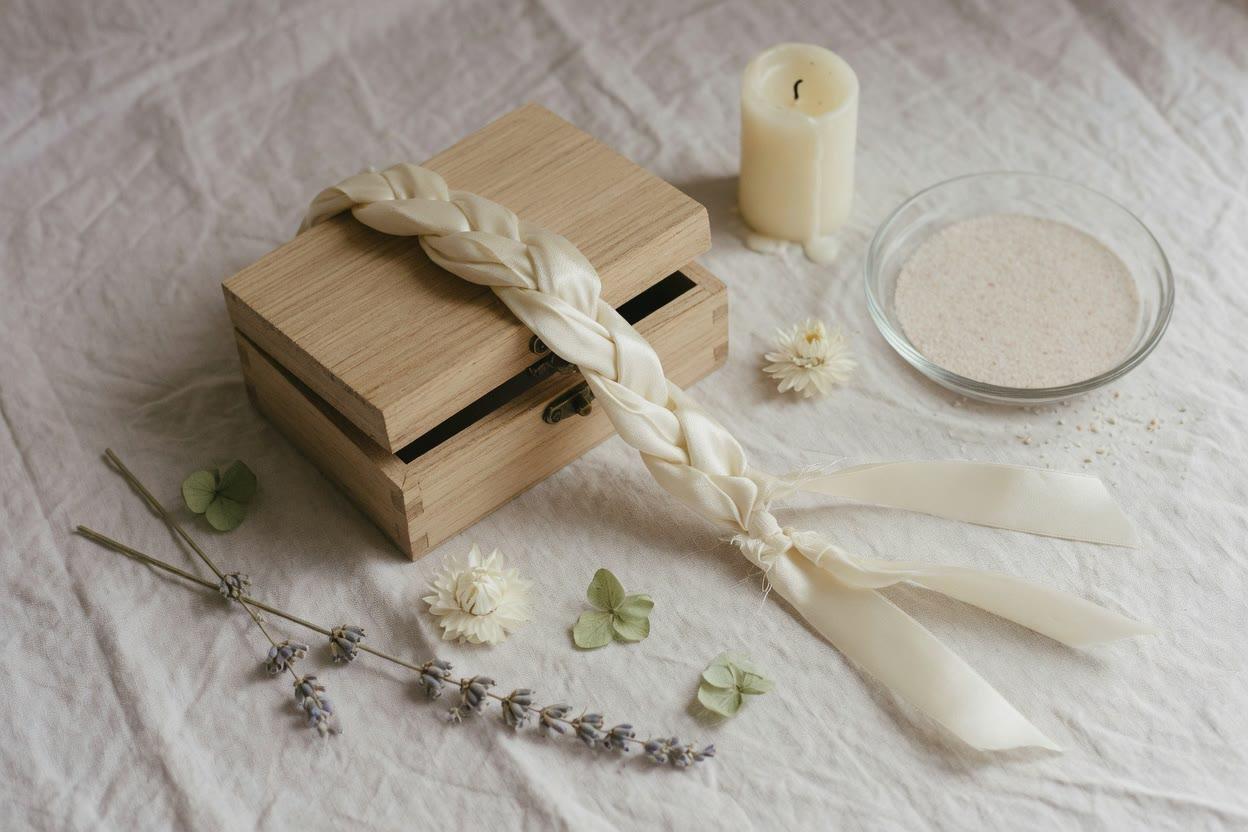
Handfasting wedding ceremony. Cords or ribbons wrap the joined hands. It reads clearly when the officiant names the symbolism in one warm sentence. Practice at rehearsal. Decide whether hands stay bound through vows or release before rings.
Ring warming ceremony. Rings move through guests for silent blessings, then return for the exchange. Intimate weddings can pass them person to person. Larger rooms may use ushers with a tray, or warm rings among parents and wedding party only. Budget real time; a full-room pass can quietly overrun.
Wine box ceremony (or love-letter box). Letters, a bottle, a seal, and a future anniversary date. Keep props pre-staged and the sealing simple.
Tree planting wedding ceremony. Soil from two places, or two scoops into one pot, says growth and care. Have towels and a helper so dress hems stay clean. A small potted tree can move home afterward.
Painting or glass. Two colors on one canvas, or pieces joined into one object. Choose this only if you enjoy making something with your hands in public. Rehearse so it looks intentional.
I tell couples to pick one. Stacking candle plus sand plus a box usually dilutes the middle instead of deepening it.
Blended Families, Kids, Outdoor, and Non-Religious Paths
Unity ceremony ideas for blended families work best when every child who wants a role has a clear, short action: a sand color, a scoop of soil, a ribbon to place, a candle lit with a parent's help. Keep instructions in the officiant's mouth, not in a whispered scramble. Unity ceremony ideas with kids should be safe (no heavy glass at toddler height), brief, and rehearsed once so little hands know where to stand.
Unity ceremony ideas for outdoor wedding days favor sand, handfasting, planting, ring warming, and letter boxes over unprotected flame. Ask the venue about open fire rules before you fall in love with a candle photo. Shade, a stable table, and one attendant nearby will save the moment when a breeze arrives.
Unity ceremony ideas non religious can be some of the warmest: a painted keepsake, a sealed letter box, a shared planting, a secular handfasting framed as partnership rather than doctrine. You do not need sacred language for a ritual to feel holy to you. You need clarity and consent from both partners.
If your day is already rich with cultural rites, you may not need a separate "unity" label. The existing tradition may already be doing that architectural work.
Brief the Officiant, and Make Sure Guests Understand
A unity ritual fails softly when nobody explains it. Guests should never squint and whisper, "What are they doing?" AMM's guidance for officiants matches what I tell couples: name the symbolism, say why you chose it, and give simple directions to begin. One or two sentences is enough. A speech is not.
Send the officiant a short brief: which ritual, who participates, where props live, how long it should run, and what happens to the keepsake afterward. At rehearsal, walk the steps once at real pace. Confirm music cues and where the photographer can stand without blocking the pour, the wrap, or the children's faces.
Guest understanding is hospitality. A printed line in the program helps ("Unity sand: colors from each household joining one vessel"). So does an officiant who speaks plainly. Modern wedding etiquette, here, is mostly kindness: do not leave people confused in the emotional center of your ceremony.
Unity ceremony ideas are optional architecture for the middle of your service. Start with permission to skip. If you say yes, choose by setting, keepsake, who is included, and whether the tone is religious or secular. Place the ritual where your officiant says the arc feels strongest, often after vows (and frequently after rings) before the pronouncement, with handfasting and ring warming as exceptions. Keep the beat near two to four minutes. Brief the person leading so guests can follow with their hearts, not their furrowed brows.
Candle and sand will always have a place. So will handfasting, ring warming, a wine or letter box, a small tree, and a painted keepsake. The best wedding unity ceremony ideas are the ones that sound like you when the room goes quiet.
I tell couples to protect that quiet. Vows, rings, and a clear pronouncement can carry a marriage into its first public minute. Add a unity moment only when it deepens the picture. Then walk out knowing the middle held, the guests understood, and nothing extra asked more than it gave back.